Hardwood floor installation in Toronto
Solid oak, walnut and maple, nailed down over a wood subfloor that has been checked for moisture and flatness first.
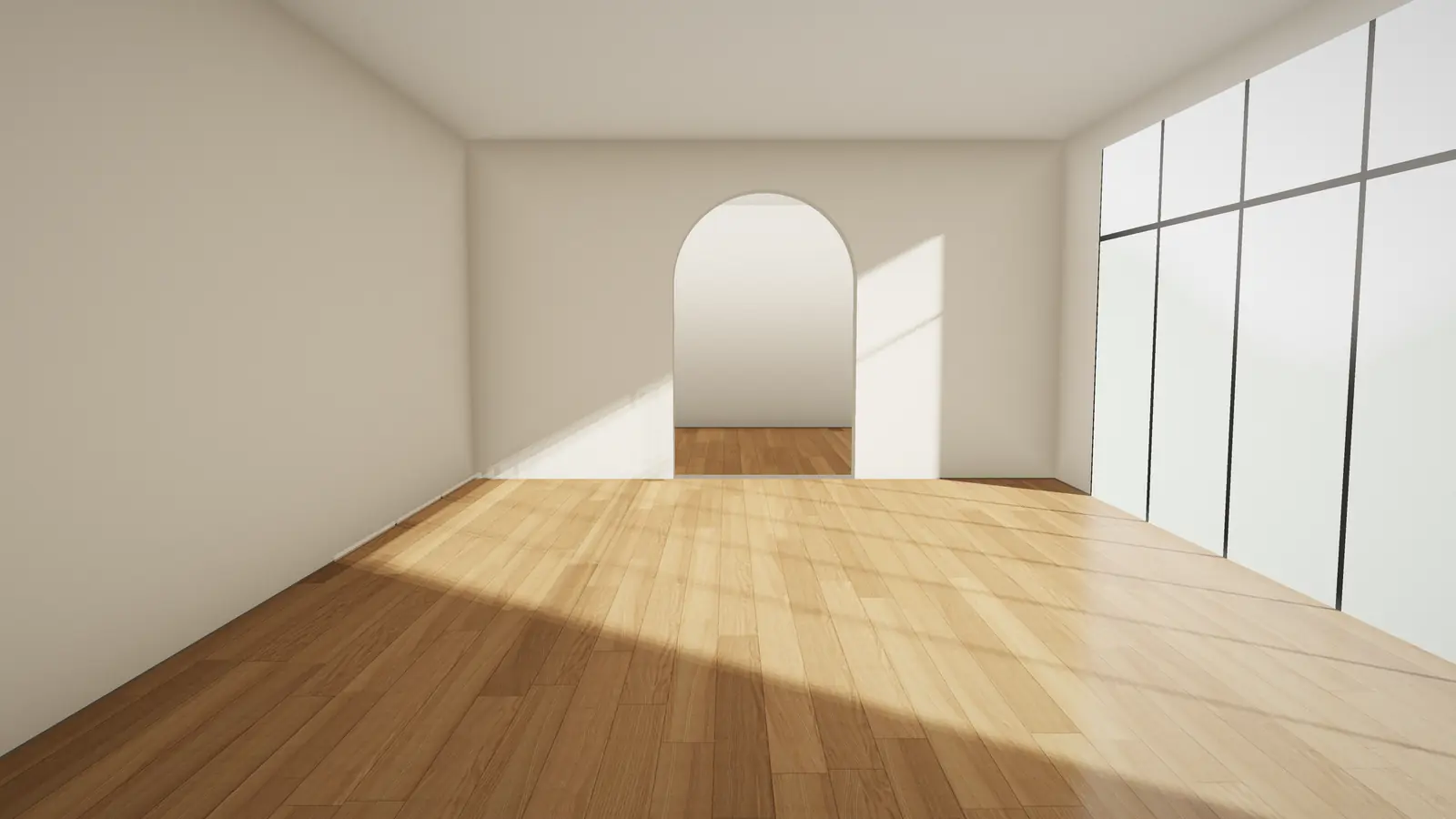
- Best for
- Houses with a wood subfloor
- Wood
- Oak, walnut, maple
- Fixing
- Nailed, or glued where the maker allows
- Can be sanded
- Several times over its life
In short
Solid hardwood is one piece of wood from top to bottom. It is usually nailed to a plywood or OSB subfloor, so it suits houses more than concrete condo slabs. Because the whole board is wood, it can be sanded and refinished many times. The trade-off is movement: solid boards shrink and swell with the seasons, more so the wider they are.
Choosing the wood
Oak is the most common choice in Toronto homes. Its open grain takes stain evenly and hides everyday wear well.
Walnut is softer and darker. It dents more easily, so it suits bedrooms and quiet rooms better than a busy entrance.
Maple is hard and pale with a tight grain. It does not take dark stains as evenly as oak, so we usually keep it close to its natural colour.
Board width and the Toronto winter
Heating season dries the air in a house. Solid boards give up moisture and shrink, which opens small gaps between them. Wide boards move more than narrow ones.
If you want planks wider than about 5 inches, we will usually suggest engineered hardwood instead, or keeping the indoor humidity in the range your flooring maker specifies.
Engineered hardwoodHow we install it
- Measure the rooms and plan the board direction, usually along the longest wall or towards the main light.
- Check the moisture of the subfloor and of the boards with a meter. They should be close before we start.
- Fix squeaks and flatten the subfloor where needed.
- Leave an expansion gap at the walls, hidden by baseboard or shoe moulding.
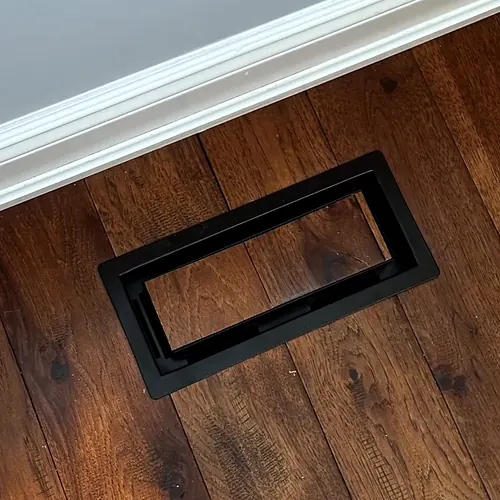
- Fit transitions, vents and stair nosings so the floor reads as one surface.
Finish: oil or lacquer
Prefinished boards arrive with a factory finish and can be walked on right away. Site-finished floors are sanded and coated after installation, which gives a flatter, more even surface and lets you choose the colour on site.
Oiled finishes look more natural and can be touched up in one spot. Lacquered (polyurethane) finishes resist spills and scratches better and need less regular care.
What changes the price
- The wood species, grade and board width
- Removing and disposing of the old floor
- Subfloor repairs or levelling
- Stairs, landings and nosings
- Site finishing versus prefinished boards
We give you a written, itemized quote after the consultation. HST is shown separately; every other cost is in the price.
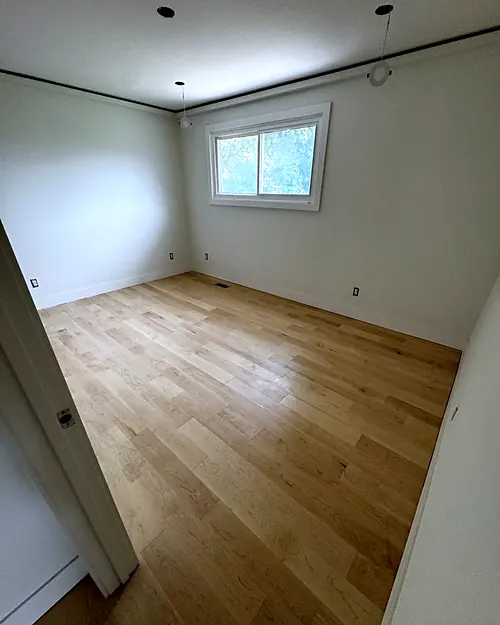
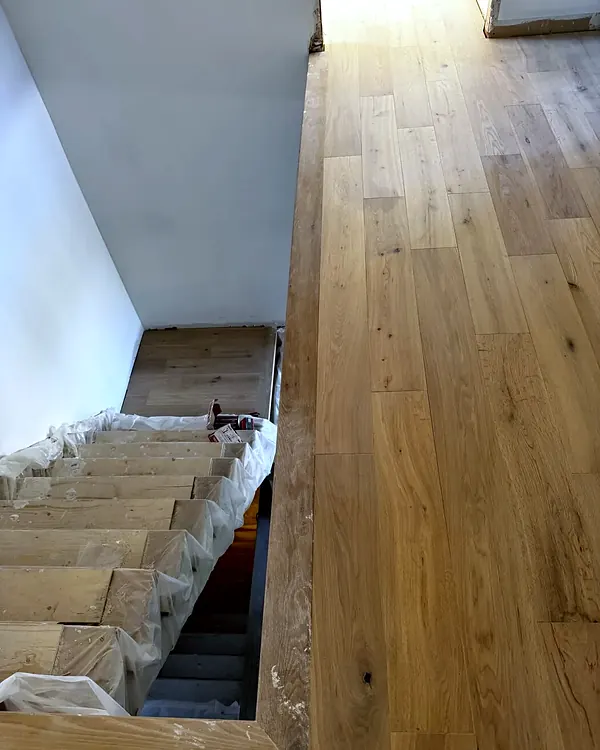
From our projects.Photographed on site.
All projects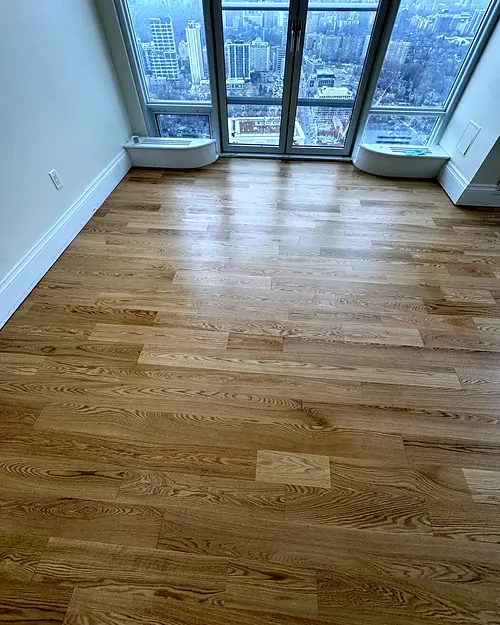
Questions.About hardwood in Toronto.
Can hardwood go over concrete?
Solid hardwood is not usually recommended directly over concrete or below grade. Engineered hardwood is the normal choice there.
How long should the boards acclimate?
It depends on the product. Most makers ask for the boards to sit in the heated rooms until their moisture is close to the subfloor's. We measure rather than count days.
Will there be gaps in winter?
Small seasonal gaps are normal with solid wood, especially wide boards. Keeping indoor humidity in the maker's range keeps them small.
Can you match an existing floor?
Often, yes. We bring samples and can stain on site to get close to an existing colour.
Related
- Engineered hardwoodA real wood surface on a cross-laid core.
- Herringbone & chevronTwo classic patterns, laid one board at a time from a centre line.
- StairsNew treads, risers and nosings, matched to the floor so the colour runs from the hall to the landing without a break.
- Sanding & refinishingAn existing wood floor taken back to bare wood, given an even colour and a new finish.
Let's look at your floors.
A consultation at your home, samples in hand, and a written price.