Engineered hardwood installation in Toronto
A real wood surface on a cross-laid core. It moves far less than solid wood, so it suits concrete condo slabs, basements and wide planks.
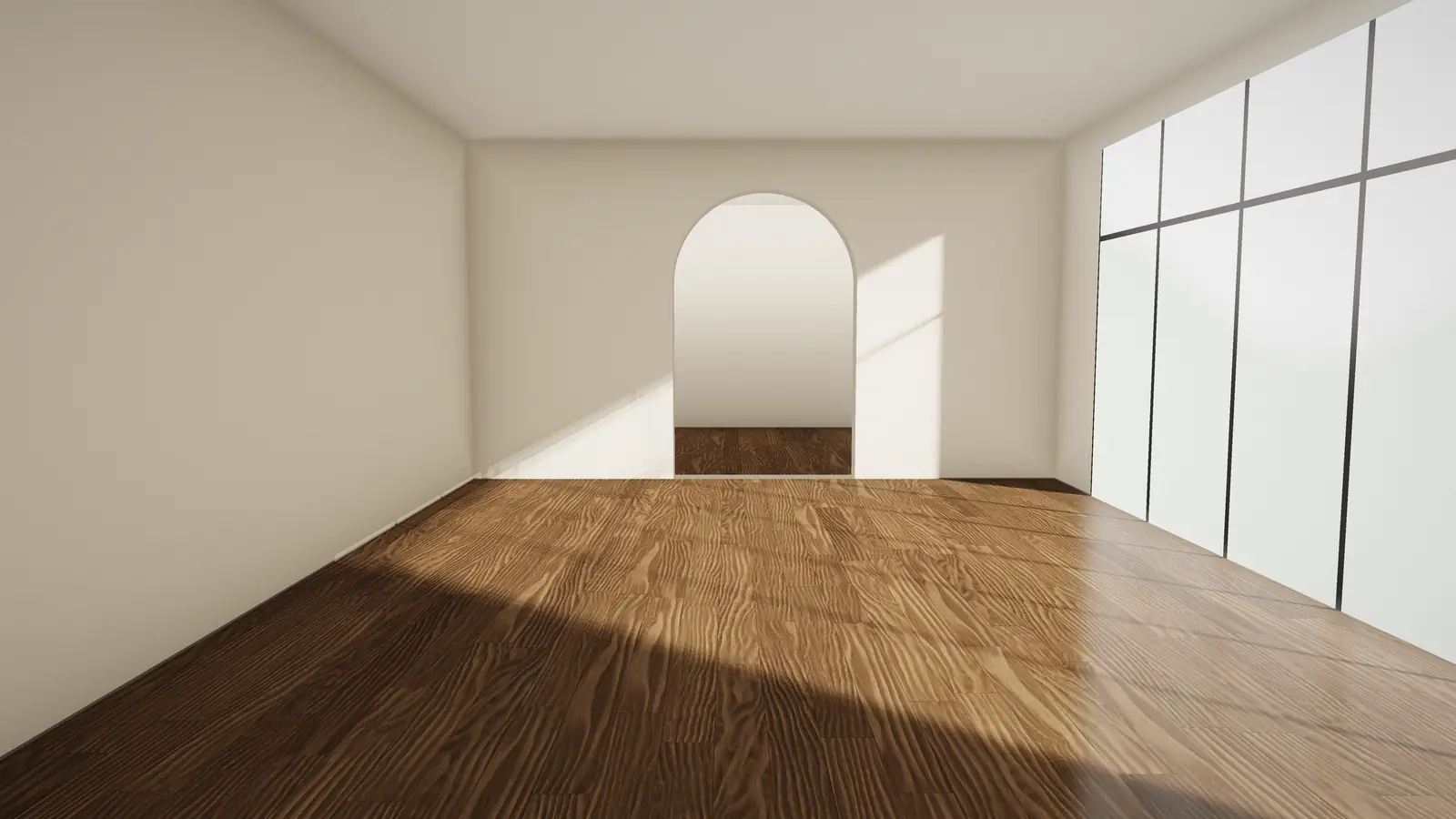
- Best for
- Condos, concrete, wide planks
- Surface
- Real wood wear layer
- Fixing
- Glued, nailed or floated
- Can be sanded
- Depends on the wear layer
In short
Engineered hardwood has a top layer of real wood bonded to a core of plywood or similar material laid in alternating directions. That core keeps the board stable when humidity changes. It can be glued to concrete, nailed to wood, or floated over an underlay, which makes it the usual choice for Toronto condos and for planks wider than about 5 inches.
Why choose engineered over solid
- It can go over a concrete slab and, with the right product, below grade.
- Wide planks stay flatter through a dry Toronto winter.
- Many products can be floated over an acoustic underlay, which condo boards often require.
From standing height, a good engineered floor looks the same as solid wood. The difference is in the core you never see.
The wear layer
The wear layer is the real wood on top. A thicker wear layer can be sanded and refinished more than once. A thin one may only take a light recoat.
We tell you the wear layer of each sample we bring, so you know what you are buying for the long term.
Installing in a condo
Most Toronto condo boards set rules for hard floors, usually a minimum sound rating for the underlay and sometimes approved products. We ask you for the building's requirements in writing before ordering material.
We also plan around elevator bookings, loading times and protection of common areas, as your building requires.
Glue, nail or float
- Glue-down: the board is bonded to the slab. Solid underfoot, common over concrete.
- Nail-down: over a wood subfloor, like solid hardwood.
- Floating: boards lock together over an underlay. Faster, and often used where an acoustic underlay is required.
The right method depends on the product and the building. Your flooring maker's instructions decide.
What changes the price
- Wear layer thickness, species and plank width
- Glue-down versus floating installation
- Acoustic underlay required by the building
- Levelling the slab
- Removal of the old floor and condo logistics
You receive a written, itemized quote after the consultation, with HST shown separately.
From our projects.Photographed on site.
All projects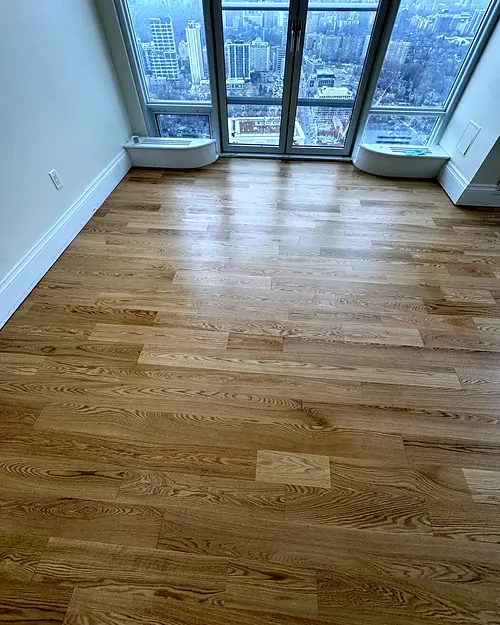
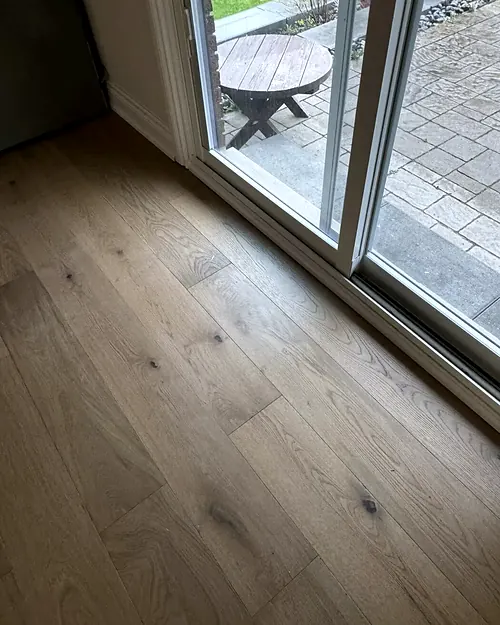
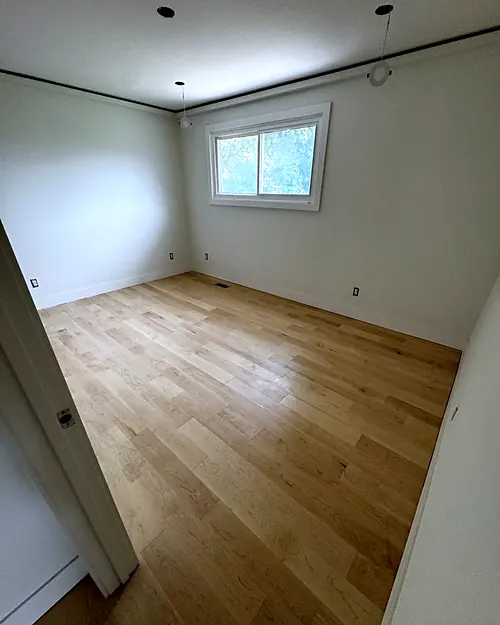
Photos show finished floors from our projects; they are not labelled by construction type.
Questions.About engineered hardwood in Toronto.
Is engineered hardwood real wood?
Yes. The surface is a layer of real wood. Only the core underneath is a different, more stable construction.
Can engineered hardwood be refinished?
If the wear layer is thick enough, yes. We check the product specification before you choose.
Is it good for a basement?
Some engineered products are approved for below-grade use over concrete. We test the slab's moisture first.
Does it need an underlay in a condo?
Usually. Most buildings require an acoustic underlay that meets their rating. We confirm the rule before ordering.
Related
- HardwoodSolid oak, walnut and maple, nailed down over a wood subfloor that has been checked for moisture and flatness first.
- Herringbone & chevronTwo classic patterns, laid one board at a time from a centre line.
- Subfloor & levellingThe flat, dry base every floor above depends on.
- Luxury vinyl & laminateHard-wearing floors for basements, rentals and busy kitchens.
Let's look at your floors.
A consultation at your home, samples in hand, and a written price.